
The answer is yes. A crown after root canal treatment helps protect the weakened tooth, restores its strength, and significantly reduces the risk of fractures. While not every tooth requires a crown, molars, premolars, and teeth with extensive damage almost always benefit from one. Choosing the right restoration at the right time can help preserve your natural tooth for many years and prevent more complex dental treatment in the future.
A root canal removes infected or inflamed pulp from inside the tooth, eliminating pain and saving the tooth from extraction. However, the procedure also leaves the remaining tooth structure more fragile than before. That’s why dentists often recommend placing a crown after root canal treatment—to reinforce the tooth and restore normal chewing function.
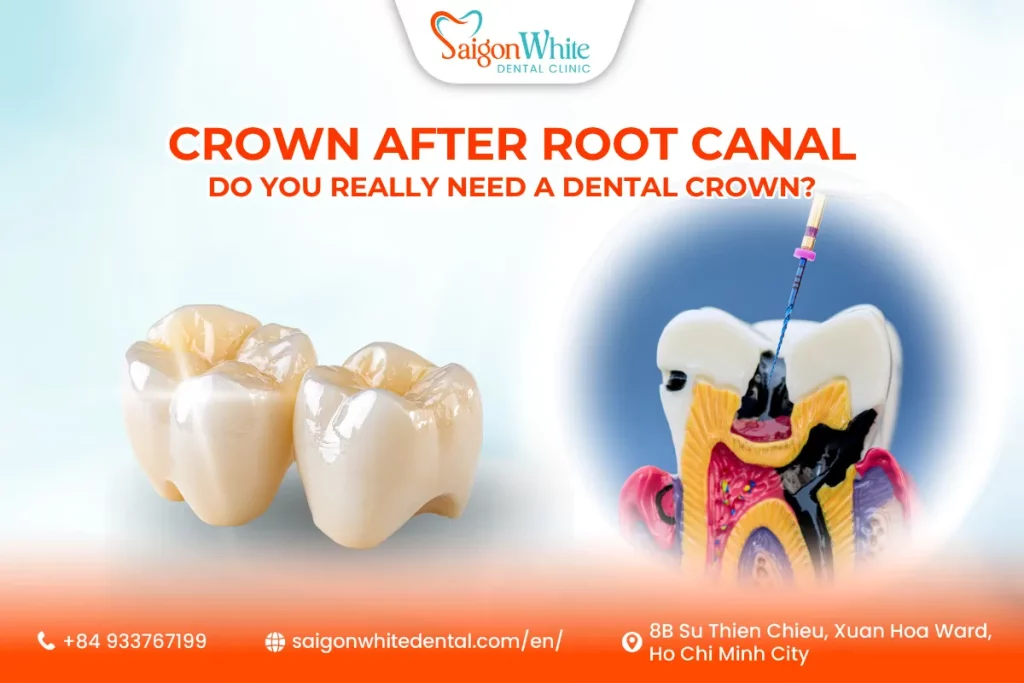
Do You Need a Crown After a Root Canal?
For many patients, a dental crown after root canal is considered the final step of treatment. While the infection has already been removed, the tooth itself may no longer be strong enough to withstand everyday biting and chewing forces.
Whether you need a crown depends on several factors, including the location of the tooth, how much natural structure remains, and your overall bite. Posterior teeth, especially molars, usually require a crown because they absorb the greatest chewing pressure. On the other hand, some front teeth with minimal damage may only need a composite filling.
Dentists evaluate every case individually. However, if a large portion of the tooth has been lost due to decay, trauma, or previous fillings, placing a crown is often the safest long-term solution.
Getting a crown doesn’t simply improve appearance—it helps protect your investment in root canal treatment by reducing the chance of future complications.
Why Does a Tooth Become Weak After Root Canal Treatment?
Many people assume that the root canal procedure itself makes the tooth brittle. In reality, the tooth becomes weaker primarily because of the damage that existed before treatment.
Most teeth requiring root canal therapy have already experienced extensive decay, deep cavities, repeated dental procedures, or fractures. These conditions remove a significant amount of healthy tooth structure before treatment even begins.
During root canal treatment, the infected pulp is carefully removed, and the inside of the tooth is cleaned and sealed. Although this preserves the tooth, some additional tooth structure must be removed to access the canals.
As a result, the remaining tooth may have:
- Less healthy enamel and dentin
- Large existing fillings
- Thin remaining walls
- Reduced resistance to heavy chewing forces
Without adequate protection, these weakened walls can crack unexpectedly, especially when chewing hard foods.
Unlike healthy teeth, a root canal-treated tooth no longer contains living pulp tissue. Although this doesn’t automatically make the tooth fragile, it no longer has the same internal support and moisture provided by healthy pulp. Combined with existing structural loss, this increases the likelihood of fractures over time.
A well-designed dental crown acts like a protective helmet, surrounding the remaining tooth and distributing biting pressure more evenly.
Which Teeth Usually Need a Crown?
Not every tooth requires the same type of restoration. Dentists consider both function and remaining tooth structure before recommending treatment.
Molars
Molars are the teeth most likely to require a crown after root canal treatment.
These teeth handle the strongest chewing forces every day. Even a small crack can rapidly worsen under constant pressure, eventually leading to tooth fracture or extraction.
Because molars often lose substantial tooth structure before root canal therapy, a full-coverage crown provides the best protection.
Premolars
Premolars also experience considerable chewing stress, although less than molars.
If a premolar has a large filling or extensive decay, a crown is usually recommended to reinforce the remaining tooth and restore long-term function.
Front Teeth
Front teeth generally receive lower biting forces compared to back teeth.
If only a small amount of tooth structure was removed during treatment, a composite filling or veneer may sometimes be sufficient. However, if the front tooth is severely fractured, discolored, or structurally compromised, a porcelain crown can restore both strength and aesthetics.
Patients seeking smile enhancement often choose ceramic crowns because they closely resemble natural enamel.
Teeth with Large Existing Fillings
Teeth that already contain large fillings before root canal treatment have less remaining natural structure.
Even if the root canal is successful, these teeth are more vulnerable to cracking over time. A crown helps reinforce weakened areas while improving long-term durability.
When Might You Not Need a Crown?
Although crowns are commonly recommended, there are situations where another restoration may be appropriate.
A crown may not be necessary if:
- The treated tooth is a front tooth with minimal structural loss.
- Most of the natural enamel remains intact.
- Only a small access opening was created during root canal treatment.
- There are no visible cracks or fractures.
- Your bite places minimal stress on the tooth.
In these situations, a bonded composite filling may provide sufficient protection while preserving more natural tooth structure.
However, regular follow-up examinations remain important. If the tooth begins showing signs of wear or cracking later, your dentist may recommend placing a crown before serious damage occurs.
Crown vs Filling After Root Canal
One of the most common questions patients ask is whether a filling is enough after root canal treatment.
The answer depends largely on how much healthy tooth remains.
| Feature | Dental Crown | Composite Filling |
|---|---|---|
| Coverage | Covers the entire tooth | Repairs only the damaged area |
| Strength | Excellent | Moderate |
| Protection Against Fracture | High | Limited |
| Longevity | Often 10–15 years or longer with proper care | Usually shorter lifespan |
| Best For | Molars, premolars, heavily damaged teeth | Small cavities and minimally damaged front teeth |
| Appearance | Excellent with porcelain or zirconia | Very natural for smaller restorations |
A filling restores lost tooth material but does not reinforce the entire tooth. A crown surrounds the remaining tooth structure, making it much more resistant to heavy chewing forces.
Although a filling may initially cost less, replacing a fractured tooth—or needing a dental implant after extraction—can be significantly more expensive than placing a crown early.
Choosing the appropriate restoration is therefore not only about today’s treatment but also about protecting your oral health in the years ahead.
At Saigon White Dental, every patient receives a personalized treatment plan based on digital imaging, clinical examination, and long-term prognosis. Rather than recommending the same solution for everyone, our dentists evaluate the condition of your tooth, bite, and aesthetic expectations to determine whether a filling or crown offers the best outcome.
Many international patients visiting Vietnam appreciate this conservative, patient-centered approach. Whenever possible, we preserve healthy tooth structure while ensuring your restored tooth remains functional, comfortable, and durable for years to come.
Types of Crowns After Root Canal
Choosing the right crown is just as important as deciding to get one. Modern dentistry offers several types of dental crowns, each with different strengths, aesthetics, and costs. Your dentist will recommend the most suitable material based on the tooth’s location, your bite, cosmetic expectations, and budget.
Porcelain Crowns
Porcelain crowns are one of the most popular options for restoring front teeth after root canal treatment. They are designed to closely mimic the color, translucency, and light-reflecting properties of natural enamel.
Patients who are concerned about the appearance of their smile often choose porcelain because it blends seamlessly with surrounding teeth. With proper care, porcelain crowns can provide many years of excellent function while maintaining a highly natural look.
Porcelain crowns are ideal for:
- Front teeth
- Cosmetic smile restorations
- Patients seeking the most natural appearance
Zirconia Crowns
Zirconia crowns have become increasingly popular because they combine exceptional strength with attractive aesthetics.
Made from advanced ceramic materials, zirconia crowns are highly resistant to chipping and fractures. This makes them an excellent choice for molars and premolars, where chewing pressure is greatest.
Modern multilayer zirconia also offers improved translucency, allowing it to resemble natural teeth more closely than earlier generations.
Benefits of zirconia crowns include:
- Outstanding durability
- Excellent resistance to wear
- Natural-looking appearance
- Biocompatible material
- Suitable for both front and back teeth
For many international patients at Saigon White Dental, zirconia has become the preferred option because it balances strength, longevity, and aesthetics.
Porcelain-Fused-to-Metal (PFM) Crowns
PFM crowns feature a metal framework covered with a layer of porcelain.
They have been used successfully for decades and remain a reliable option in many clinical situations. The metal core provides strength, while the porcelain exterior improves appearance.
However, compared to all-ceramic restorations, PFM crowns may eventually develop a dark line near the gumline as gums naturally recede over time.
Gold Crowns
Although less common today, gold crowns remain one of the most durable restorative materials available.
Gold is extremely strong, resists wear exceptionally well, and requires minimal removal of healthy tooth structure.
Because of their metallic appearance, gold crowns are generally reserved for back teeth that are not visible when smiling.
How Long Should You Wait Before Getting a Crown?
One of the most common questions after root canal treatment is how soon a permanent crown should be placed.
In most cases, dentists recommend restoring the tooth as soon as possible—typically within a few weeks after the root canal is completed.
If the tooth has become severely weakened, delaying the final restoration increases the risk of fractures that may not be repairable.
The timeline usually looks like this:
Immediately After Root Canal
The dentist seals the access opening with a temporary or permanent filling.
Temporary Crown (If Needed)
For teeth requiring additional preparation or laboratory fabrication, a temporary crown may be placed to protect the tooth.
Temporary crowns allow patients to eat and smile comfortably while the permanent restoration is being created.
Permanent Crown Placement
Once the custom crown is ready, it is carefully fitted, adjusted, and permanently cemented.
The result is a tooth that looks natural, functions normally, and is protected from future damage.
What Happens If You Delay Getting a Crown?
Some patients postpone getting a crown because the tooth no longer hurts after root canal treatment. Unfortunately, pain relief does not mean the tooth has regained its original strength.
Waiting several months—or even longer—can increase the risk of serious complications.
Tooth Fracture
The most common consequence is cracking or breaking the tooth.
Since root canal-treated teeth are already structurally compromised, everyday chewing can eventually cause fractures that extend below the gumline.
Once this occurs, saving the tooth may no longer be possible.
Reinfection
If a filling becomes loose or the tooth develops cracks, bacteria may enter the root canal system again.
This can lead to reinfection, swelling, pain, and the need for retreatment or apical surgery.
Tooth Extraction
Severe fractures often leave extraction as the only treatment option.
Losing a natural tooth can affect chewing efficiency, speech, and neighboring teeth.
Replacing an extracted tooth with a dental implant or bridge is generally more expensive and time-consuming than protecting it with a crown from the beginning.
Simply put, delaying a crown can turn a straightforward restoration into a much more complex dental procedure.
Crown Procedure After Root Canal
Receiving a dental crown is a comfortable and predictable process. At Saigon White Dental, digital technology allows crowns to be fabricated with exceptional precision while ensuring a comfortable patient experience.
Step 1: Comprehensive Examination
Your dentist first evaluates the treated tooth using digital X-rays and a clinical examination.
This ensures the root canal has healed properly and confirms that the tooth is ready for its final restoration.
Step 2: Tooth Preparation
A small amount of enamel is reshaped to create enough space for the crown.
Every effort is made to preserve as much healthy tooth structure as possible.
Step 3: Digital Scan or Impression
Instead of traditional impression materials, many patients benefit from digital intraoral scanning.
The scan captures highly accurate 3D images, allowing technicians to fabricate crowns that fit comfortably and precisely.
Step 4: Temporary Crown
If the permanent crown is not ready on the same day, a temporary crown protects the prepared tooth.
Patients can continue their normal daily activities while waiting for the final restoration.
Step 5: Permanent Crown Placement
Once completed, the permanent crown is carefully checked for fit, color, bite alignment, and comfort before being permanently bonded to the tooth.
Most patients quickly adapt to their new crown and can return to eating normally within a short period.
How Much Does a Crown After Root Canal Cost in Vietnam?
Vietnam has become one of Asia’s leading destinations for high-quality, affordable dental care. Patients from Australia, Canada, the United States, Europe, South Korea, and many other countries travel here to receive modern treatment while enjoying significant savings compared to prices in their home countries.
The cost of a dental crown after a root canal depends on several factors, including:
- The type of crown material
- The complexity of the restoration
- Whether additional procedures are required
- Laboratory technology used
- The dentist’s expertise
While prices vary, patients consistently find that Vietnam offers excellent value without compromising quality.
At Saigon White Dental, treatment plans are transparent from the beginning. Every patient receives a detailed consultation, digital examination, and clear explanation of available crown materials before treatment begins. There are no hidden fees, allowing international patients to plan their dental journey with confidence.
Why Choose Saigon White Dental?
Choosing the right dental clinic is just as important as choosing the right restoration.
At Saigon White Dental, our team combines years of clinical experience with advanced digital technology to deliver predictable, long-lasting results for local and international patients alike.
Patients choose us because we offer:
- Experienced dentists specializing in restorative and cosmetic dentistry
- High-quality porcelain and zirconia crowns
- Modern digital X-ray and intraoral scanning technology
- Personalized treatment plans tailored to each patient’s needs
- English-speaking staff dedicated to supporting international visitors
- Transparent pricing with no unexpected costs
- Comfortable, patient-focused care in a modern clinical environment
Whether you need a single crown after a root canal or a complete smile restoration, our goal is to preserve your natural teeth whenever possible while helping you achieve a healthy, confident smile.
Frequently Asked Questions
Is a crown always necessary after a root canal?
No. Some front teeth with minimal structural damage may only require a filling. However, molars and heavily restored teeth usually benefit from a crown for long-term protection.
Can I chew normally after getting a dental crown?
Yes. Once the permanent crown is placed and adjusted, you can usually return to eating normally. Avoid extremely hard foods for the first day after cementation.
How long does a crown after root canal last?
With proper oral hygiene and regular dental check-ups, many crowns last between 10 and 15 years, while high-quality zirconia or porcelain crowns may last even longer.
Can a crowned tooth become infected again?
Although uncommon, reinfection is possible if bacteria enter through a crack, leaking restoration, or untreated decay around the crown. Maintaining good oral hygiene and routine dental visits helps reduce this risk.
Which is better: zirconia or porcelain?
Both materials offer excellent results. Zirconia provides superior strength, making it ideal for back teeth, while porcelain offers exceptional aesthetics for visible front teeth.
Is getting a dental crown painful?
The procedure is generally comfortable. Local anesthesia is used during tooth preparation, and most patients experience little to no discomfort afterward.
Can I wait several months before getting my crown?
Waiting too long increases the risk of tooth fractures and may compromise the success of your root canal treatment. It’s best to have the tooth permanently restored as soon as your dentist recommends.
What should I do if my temporary crown falls off?
Contact your dentist promptly. Avoid chewing on the affected side, keep the temporary crown if possible, and schedule an appointment to have it replaced or recemented.
Conclusion
A successful root canal treatment saves your natural tooth, but protecting that tooth is equally important. For many patients, a crown after root canal provides the strength, durability, and long-term protection needed to prevent fractures and extend the life of the treated tooth.
If you’ve recently completed root canal treatment or have been told you may need a dental crown, the experienced team at Saigon White Dental is here to help. We provide personalized treatment plans, premium crown materials, and advanced digital dentistry to restore both the function and appearance of your smile.
Book a consultation today and let us help you protect your natural tooth with a restoration designed to last for years to come.
 Messenger FB
 WhatsApp
 Book now